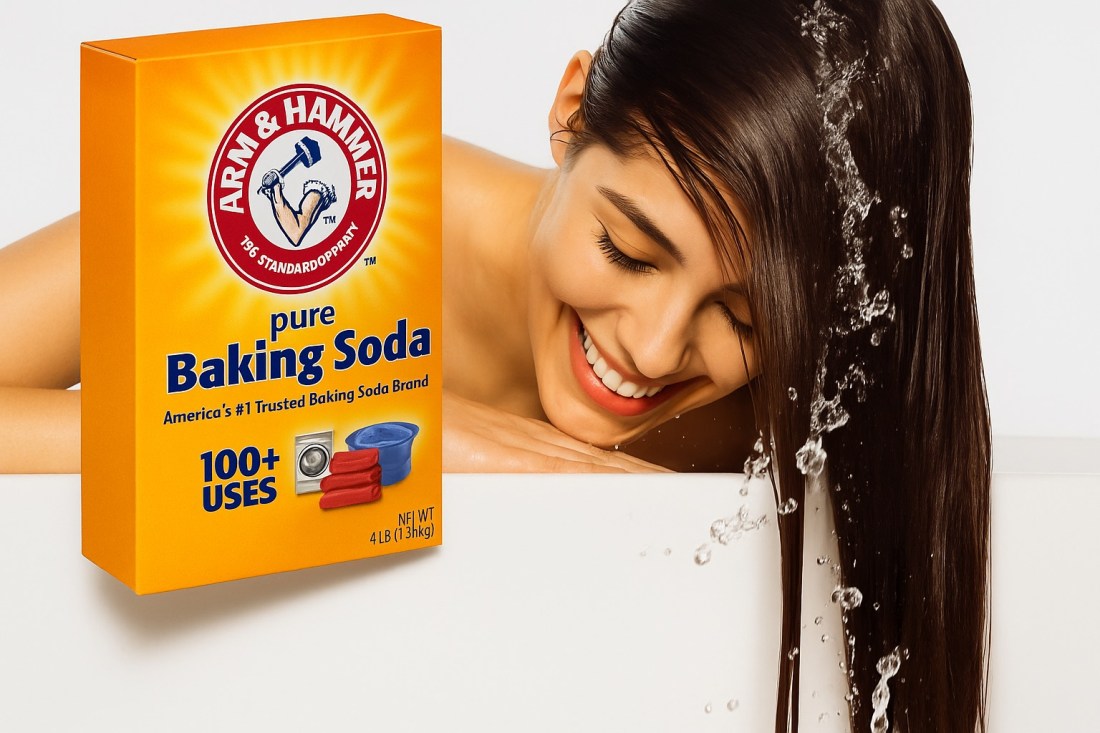
An experiment that ended in disaster
I’ve tried a lot of things on myself, but the result of this particular experiment will probably remain one of the most memorable — and most regrettable — of them all.
After my search for natural rejuvenation methods hit a wall, I decided to bring in collective wisdom and created a small online group for people to share their experiences.
Soon, under the “Hair Beauty” section, someone left a comment that instantly caught my attention:
Here’s how to make your hair healthy without spending much. :)
This trick gets rid of dandruff completely and lets you wash your hair just once or twice a week.

You’ve probably heard that you can use regular baking soda instead of shampoo.
It’s simple: mix two teaspoons of soda into a glass of warm water (a bit less if your hair is fine or thin — find the right amount for you). Start with one teaspoon.
Use this soda mix like shampoo, making sure to rinse the roots really well — if you miss a spot, your scalp will stay oily.
Rinse with water and a splash of vinegar, then rinse again with plain water to get rid of the vinegar smell.

After the first wash your hair will feel super clean, but there’s an adjustment phase — about a week or so — when it might stay greasy.
Just hang in there! Once your scalp gets used to it, soda washing works great.

I’ve been using this method for six years now — still happy, still shampoo-free.
And no, it doesn’t strip hair color. :)
That comment really intrigued me — I’d love to wash my long, fine hair less often, and I was in a “chemical detox” phase. A 100% natural product you can technically eat? Perfect.
At first, it seemed like a win. I didn’t end up washing less often though, but I liked the clean feel, left a positive review in the group, and officially switched to baking soda.
Time went by
A few months later I discovered various natural rejuvenation techniques and started working on the scalp aponeurosis — in plain terms, lifting your hair to release fibrotic tension in the scalp that contributes to facial aging.
Then odd things began to happen: suddenly I had bangs — something I’d never had. I cheered, assuming better circulation meant faster growth. But the bangs kept getting thicker… while my long lengths kept thinning.

That’s when I went digging for information to check my hunch that scalp work might be involved. I found that intensive stimulation can sometimes trigger shedding. I faced a hard choice: my face or my hair. I chose the face and kept both routines — soda washes and aponeurosis work.
Very soon another realization landed: what I’d taken for regrowth wasn’t new hair at all — it was breakage.
And the final lightbulb moment came later: the scalp work wasn’t the main culprit. It was the baking soda. It had dried my hair so badly that it started snapping off, leaving ragged tufts about four to eight inches long.
Conclusion
These days it’s easy to hide hair trouble. Wigs felt too radical, and extensions didn’t mix well with scalp work, so I bought a couple of clip-in ponytails — and the compliments on my “luxurious hair” rolled in.
One hitch: my pathological honesty. I couldn’t just smile and say “thank you” — I’d blurt out that the hair wasn’t mine and watch people freeze.
Postscript
Baking soda is a useful thing with plenty of purposes, body care included. But everything is individual: what’s great for one person can be a total disaster for another.
I’m not shifting blame — maybe my mix was too strong, maybe my scalp work was too intense, or maybe this method just isn’t for me.
Sadly, this lesson didn’t save me from a similar mistake later — the fallout from double cleansing. But that’s a story for another article.
The original Russian version of this article was published on September 10, 2018.
Powered by coffee ☕
Every drop keeps the stories flowing.
